Andus Labs:
Producing a 7-Hour Live Broadcast
for AfterNow.
Red Summit Productions produced AfterNow LIVE, a full-day broadcast summit for Andus Labs, streamed live from a Manhattan studio in front of a live audience with zero room for a second take.
Producing a Flawless Broadcast for AI's Boldest Voices.
Andus Labs came to Red Summit Productions to produce AfterNow LIVE, a full-day broadcast summit exploring the future of artificial intelligence. The show brought together twelve speakers and hosts, virtual and in-person, for ten distinct live segments streamed continuously for seven hours from a studio in Manhattan, in front of a seated audience with cameras rolling the entire time.
Unlike a traditional shoot, there would be no reshoots, no editing room fixes, and no second chances. Every camera move, set change, and cue had to work the first time, live, in front of the people watching in the room and the people watching the stream.
Our role was to plan, build, and run that broadcast from the ground up, and make it look effortless.
One take. Seven hours. No do-overs.
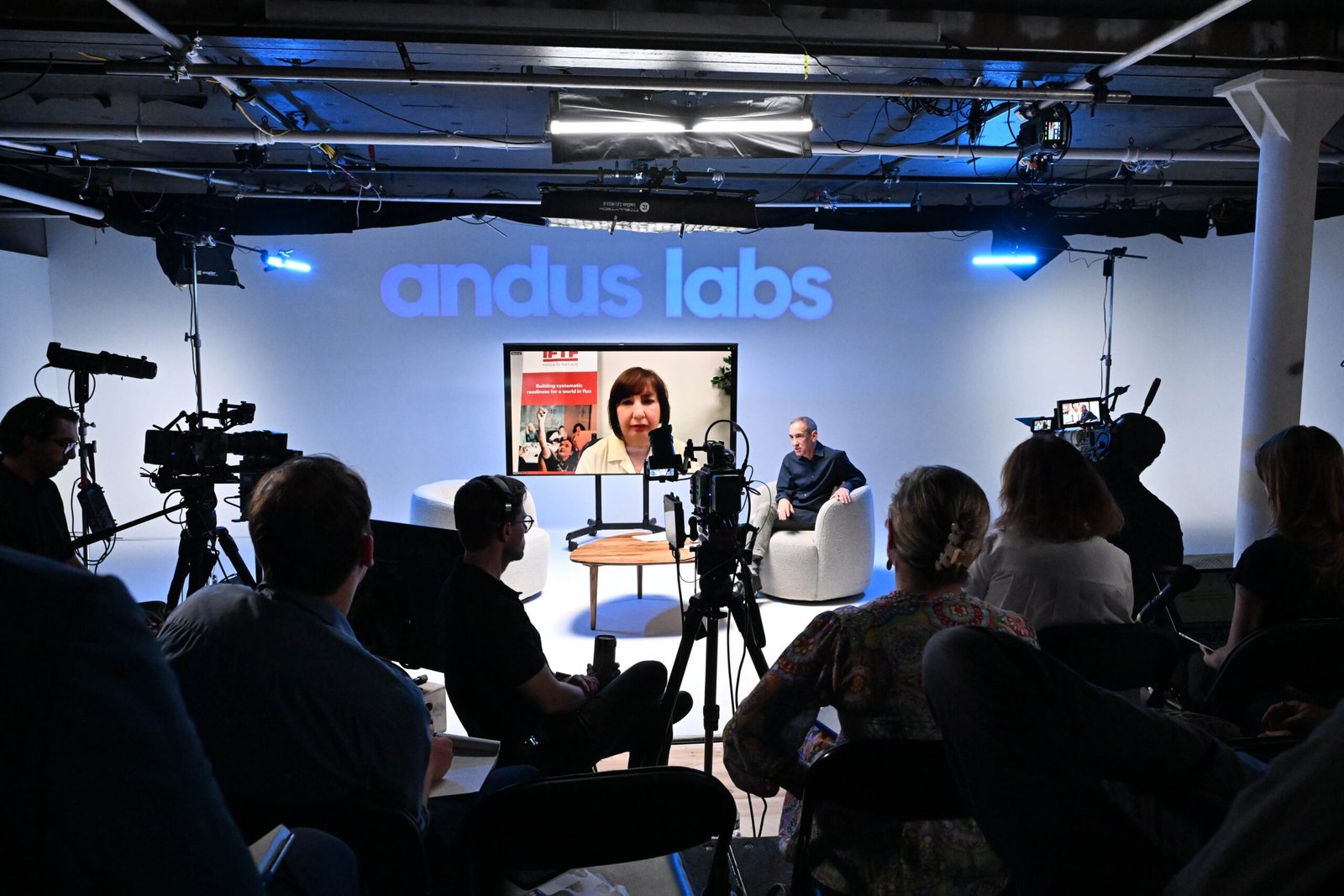
AfterNow LIVE wasn't a single interview or a single stage. Over the course of one day, the program moved through ten segments in ten different formats, a podium for opening remarks, a single chair and screen for virtual conversations with guests joining from off-site, two-chair in-person interviews, and full demo setups with laptops streaming live to the room. Nearly every segment meant physically moving furniture, cameras, and gear into a new configuration, on air, without breaking the flow of the broadcast.
Layered on top of the live set changes was a guest list spanning twelve speakers and hosts, some joining virtually, some seated a few feet from the audience, each with their own mic assignments, cues, and transition slides. Add a live studio audience taking part in Q&A through handheld mics, and the margin for error on any single handoff was effectively zero.
The challenge wasn't just capturing seven hours of content, it was engineering a show that could shift shape every thirty to forty-five minutes and still feel seamless to everyone watching, in the room and on the stream.
Building the show before the show ever aired.
A live broadcast this complex is won or lost in pre-production. Working closely with the Andus Labs team, Red Summit built out a minute-by-minute run of show mapping all ten segments, every guest, every host pairing, every transition slide, and every mic assignment across the full seven hours. Nothing was left to be figured out in the moment.
We planned camera blocking and set configurations for each format in advance, podium, single chair and screen for virtual guests, two-chair conversations, and demo tables with live laptop streaming, so that every changeover had a defined choreography rather than a scramble. Custom gobo lighting was designed and built to give the show a distinct, branded look against the studio's white cyc, shifting subtly from segment to segment without slowing anything down.
By the time the crew called at 8:00 AM on shoot day, the show had already been run on paper dozens of times, which is exactly what let it run in real life without a hitch.
Every transition, every prop move, every camera cut was scripted to the minute. A live broadcast doesn't get a second take.
A production that moved as fast as the show did.
Crew called at MCM Studios at 8:00 AM for final rehearsals, with the Andus Labs team and in-person guests arriving by 10:30. At 10:45 AM, the show went live and stayed live, opening remarks from a podium, a rapid run of virtual and in-person conversations, live audience Q&A, and product demos streamed straight off a laptop, all captured continuously through to close at 5:00 PM.
Between segments, our crew physically reset the stage, swapping a podium for a two-chair setup, then for a virtual-guest chair and screen, then for a demo table, in the same one-to-two-minute transition windows built into the run of show. Gaffers adjusted the custom gobo looks for each configuration in real time, keeping the lighting consistent against the white cyc no matter how the set changed underneath it.
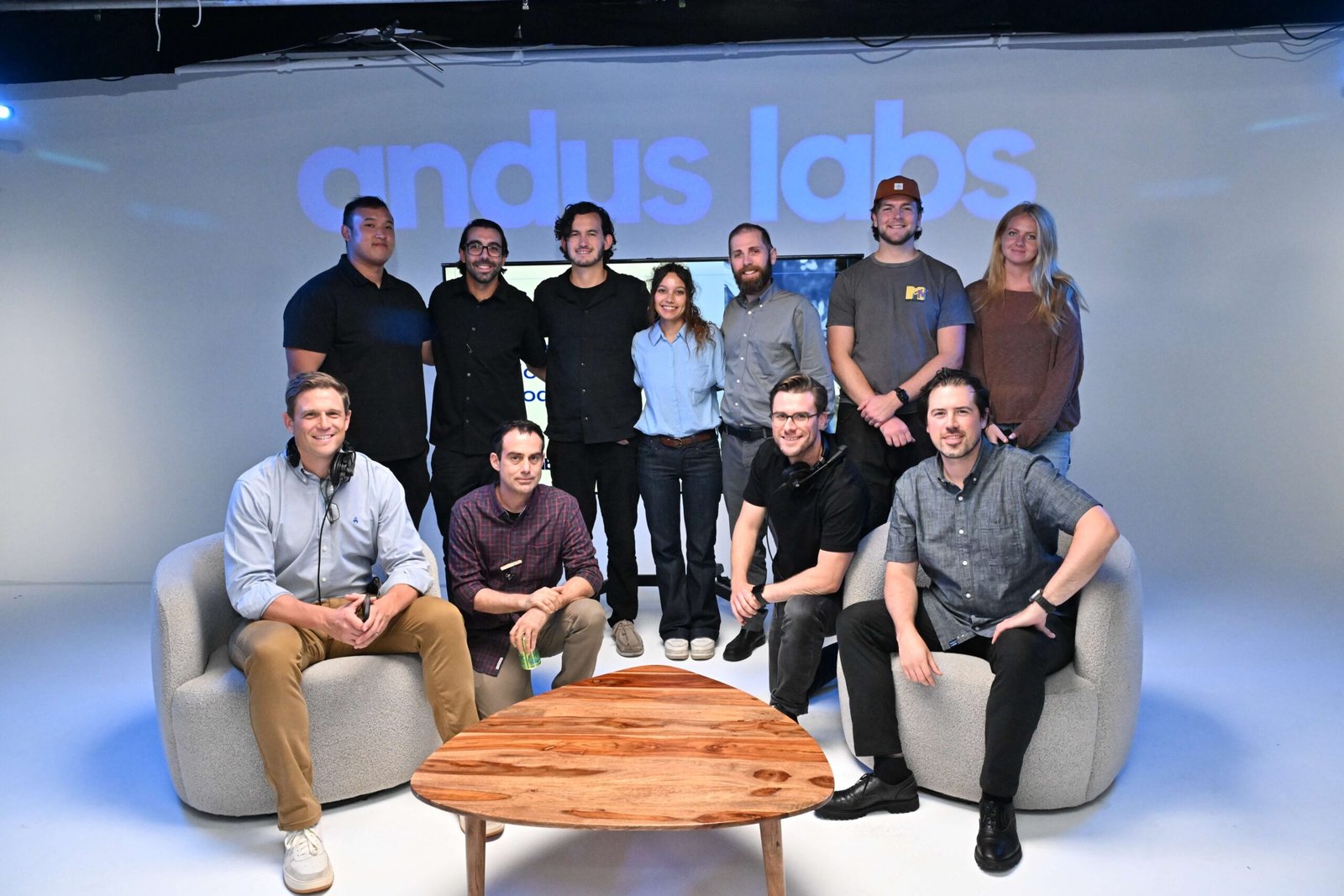
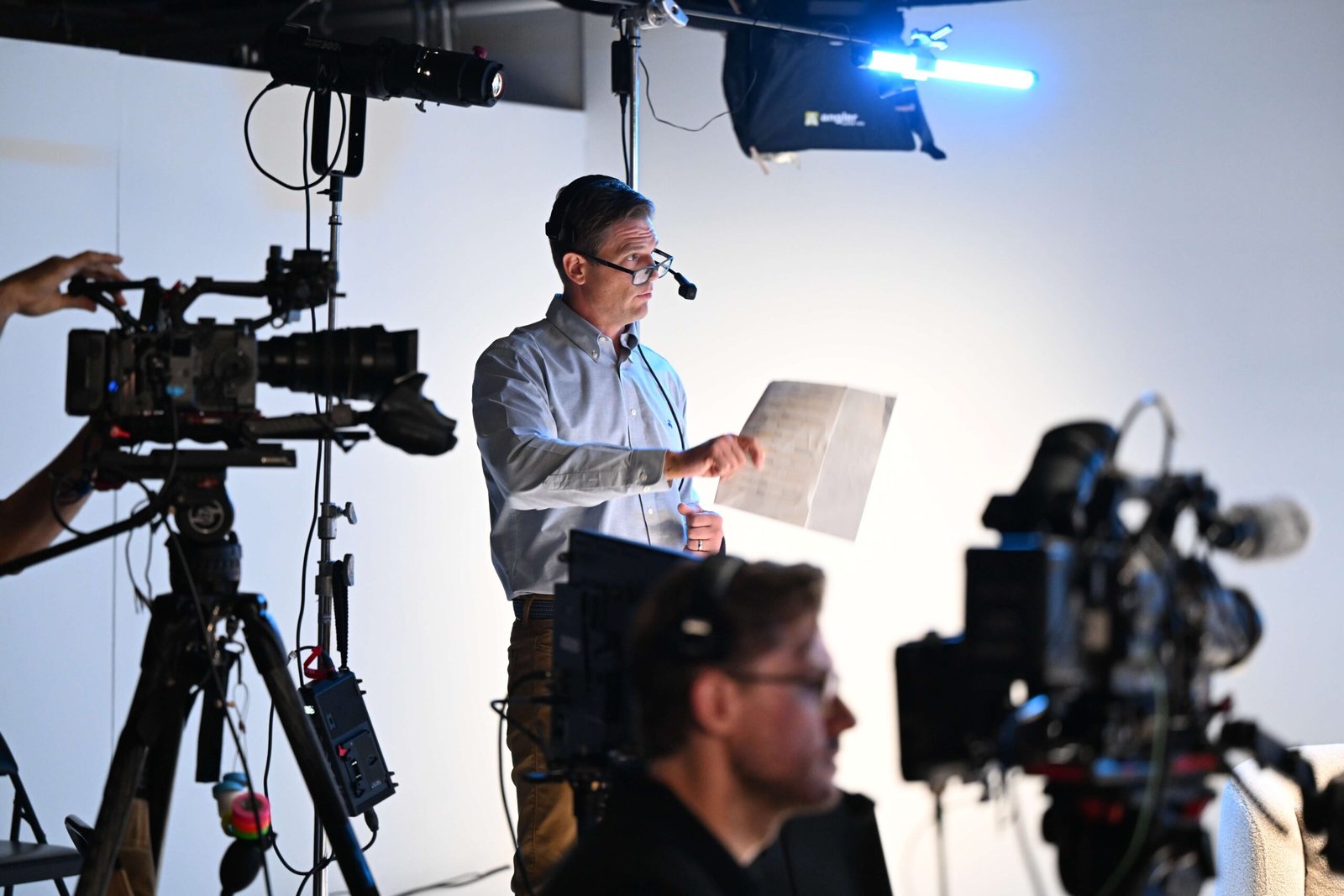
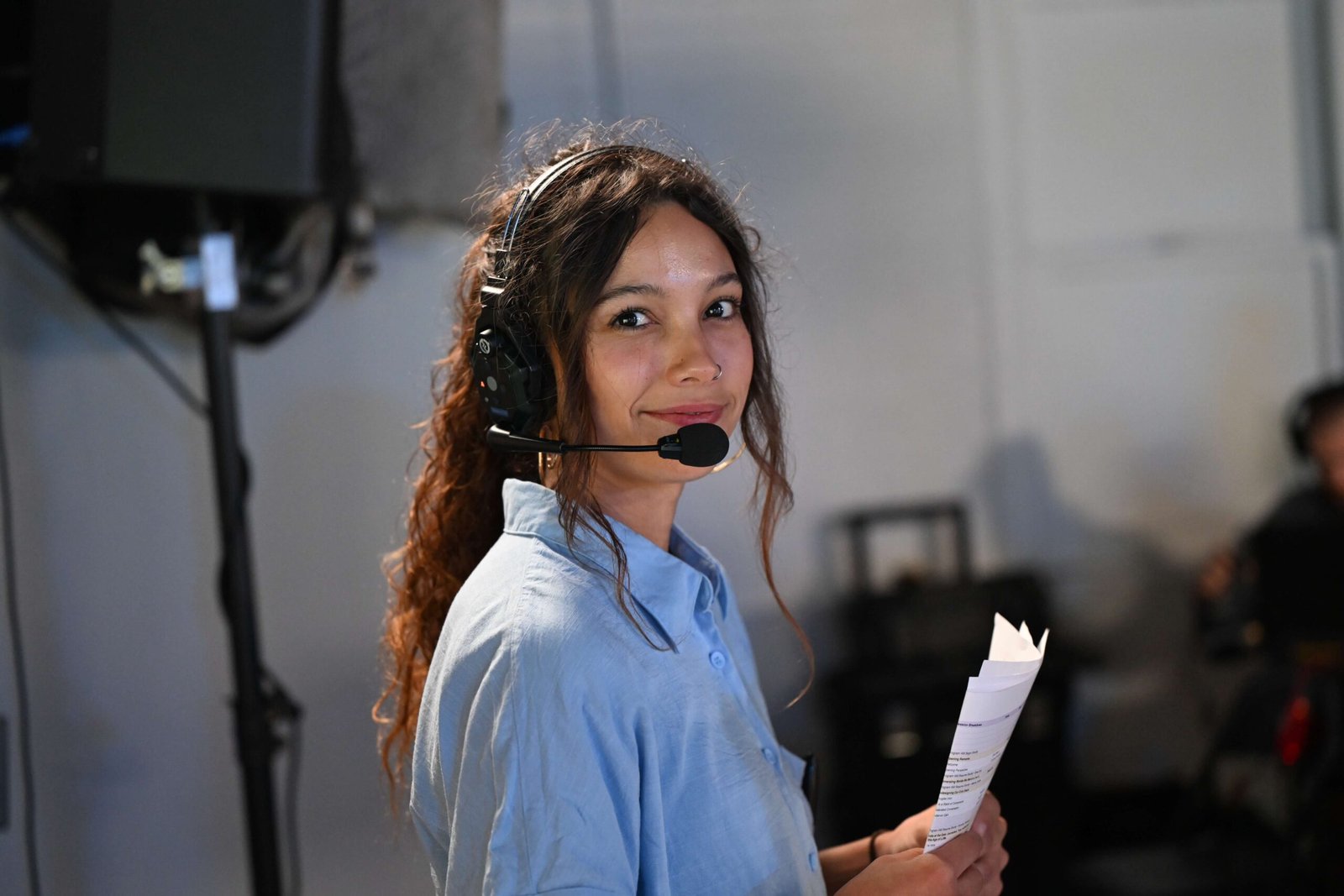
A team of fifteen-plus on site, producers, a live technical operator, a DP, two camera operators, an audio engineer and A2, gaffers, and a photographer, kept every moving piece synchronized so the audience never saw the seams.
Two camera operators, one continuous story.
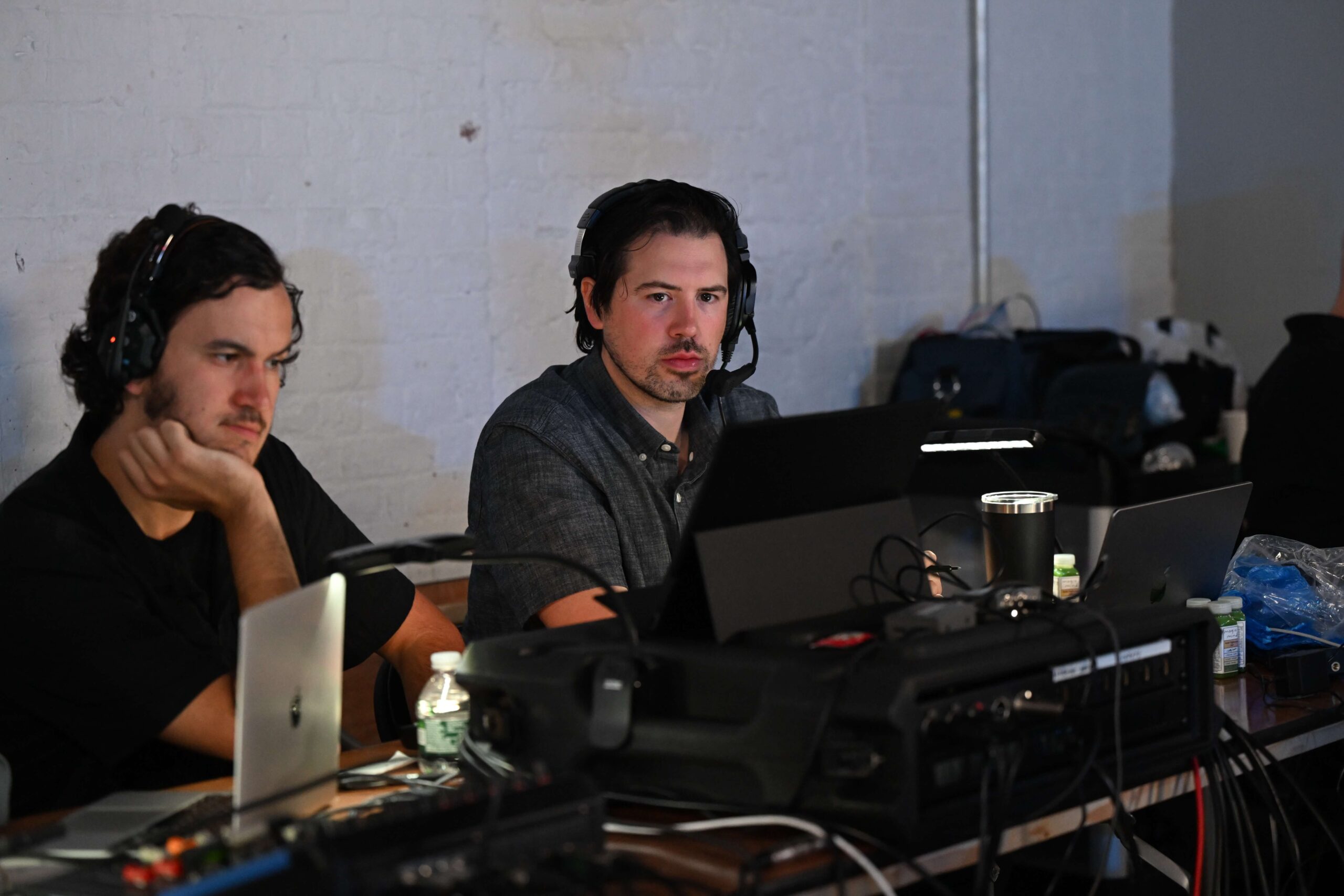
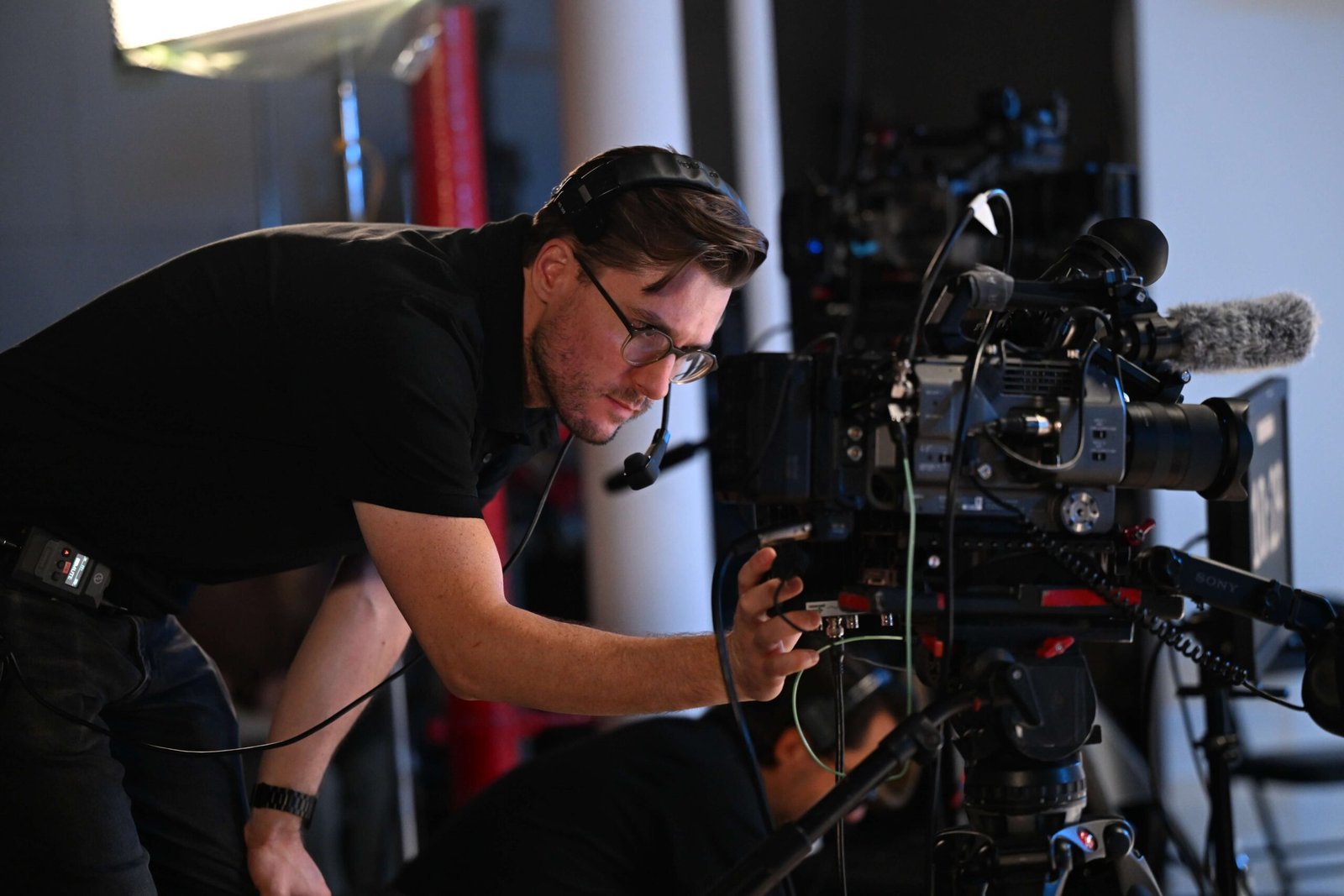
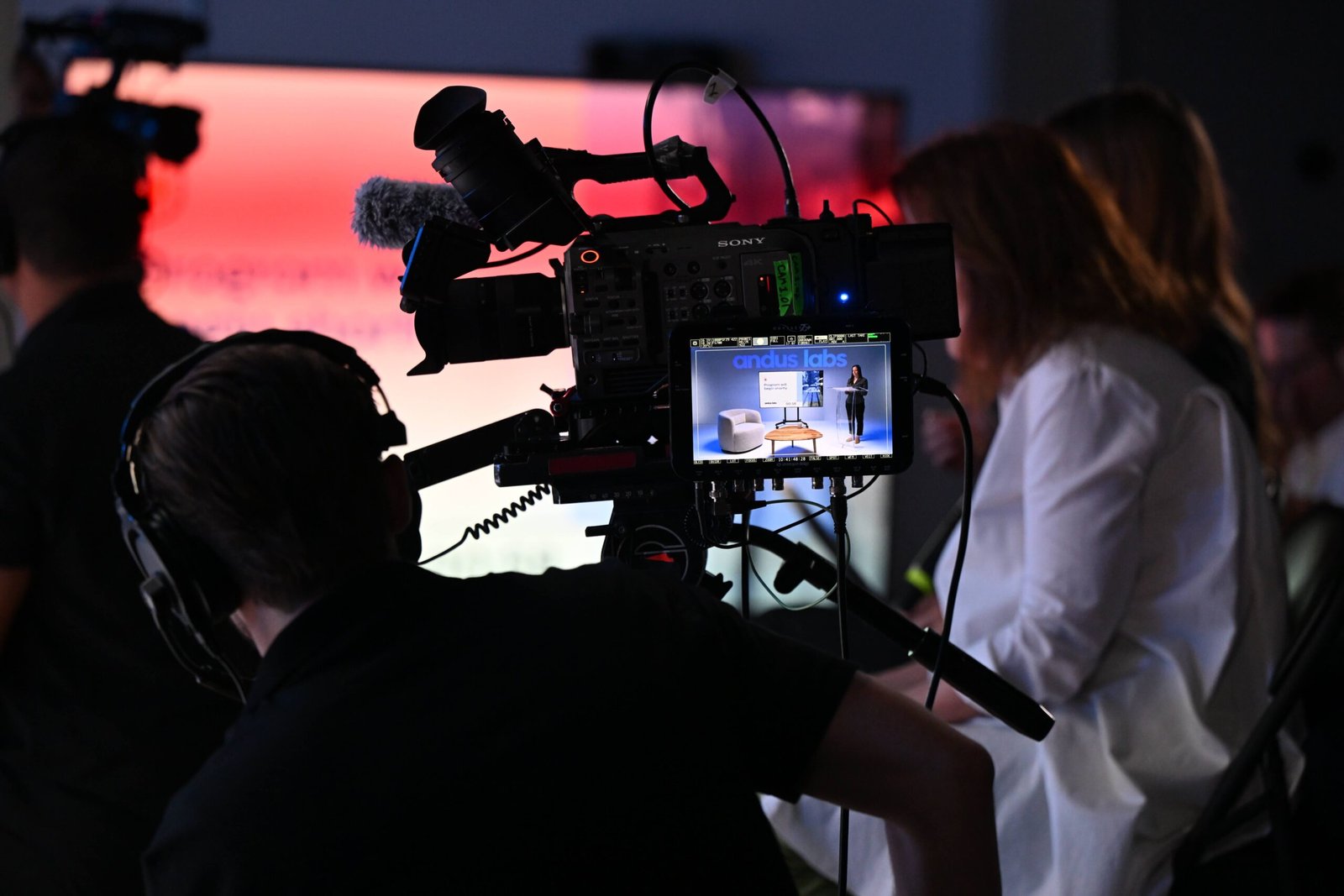
With guests moving between a podium, chairs, and demo tables, and virtual speakers cutting in on screen, coverage had to stay clean and consistent across every format. Two camera operators worked alongside a dedicated live technical operator and live switcher to keep the broadcast cutting smoothly between in-person conversations, remote guests, presentation slides, and audience shots without a visible drop.
On the audio side, our A2 managed up to six lav mics plus two handheld audience mics per segment, reassigning them on the fly as the guest lineup rotated through the day, so every voice, on stage or in the crowd, came through clean on the stream.
A seamless seven hours, delivered live.
AfterNow LIVE went out exactly as planned: seven uninterrupted hours, ten segments, twelve speakers, and a live studio audience, without a single dropped cue. What could have been a logistical liability, constant set changes, a mixed virtual and in-person guest list, live audience participation, became the show's strength, giving Andus Labs a broadcast that felt dynamic and tightly produced from opening remarks to close.
The level of pre-production planning we put in before a single camera rolled is what made the live day feel controlled rather than chaotic, and it's the model we now bring to every live broadcast we produce.